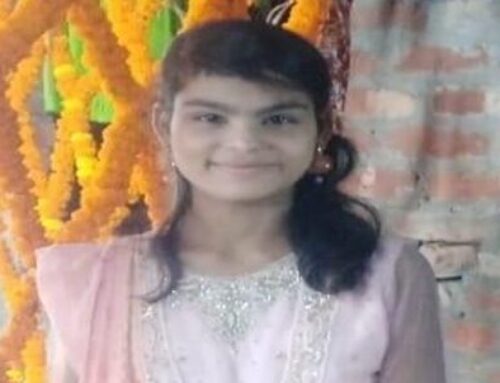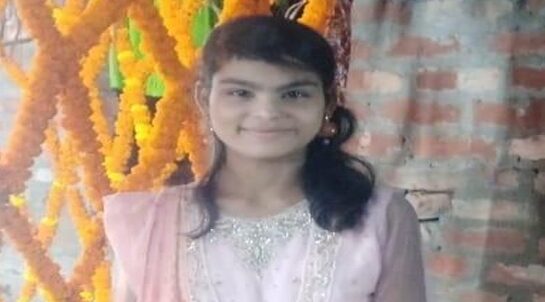
In a quiet corner of Sitamarhi district lies Raksiya village, where 22-year-old Neha Parveen grew up surrounded by challenges. The youngest daughter of Nisar Ahmad, Neha belongs to a poor and traditional Muslim family. With seven sisters and ageing parents too weak to earn a livelihood, the weight of responsibility fell heavily on her shoulders. Despite the struggles, Neha was determined to pursue education and managed to complete her B.A. final year with a second division—an achievement in itself considering her circumstances. But after graduation, she faced a harsh reality: her family had no source of income, and survival was becoming more difficult by the day.
It was during this time that Neha came across the Zubaida Skill Development Centre, an initiative of Eva Foundation offering free stitching classes to women and girls. Hopeful for change, she enrolled in the training program. From learning the basics of cloth cutting and handling a sewing machine to mastering different styles of stitching, Neha worked tirelessly. She was a fast learner and soon emerged as the top student in her batch, proudly ranking first in her sewing class. Her hard work began to pay off when she started stitching clothes for people in her village. Slowly, her small orders turned into a steady source of income. Today, Neha earns between ₹5,000 to ₹8,000 a month—money that not only runs her household but also ensures her family’s dignity and survival.
What makes Neha’s story remarkable is not just her earnings, but the way she redefined what was possible for girls in her community. In a place where traditions often confined women to the four walls of their homes, Neha stepped out—needle and thread in hand—to prove that girls too can be providers. While some criticized her for breaking social norms, Neha remained strong, knowing her efforts were keeping her family together. Her courage and determination have slowly begun to shift mindsets in her village, inspiring parents to see value in their daughters’ skills and education.
Looking back, Neha is filled with gratitude toward the Eva Foundation for giving her the opportunity to learn a skill that changed her life. She takes pride in being the main support of her family and dreams of expanding her work further. To the young girls of her village, she is now more than just a seamstress—she is a symbol of hope, independence, and resilience. Neha’s story is a reminder that sometimes, all it takes is one chance and one skill to stitch together not just clothes, but an entire family’s future.